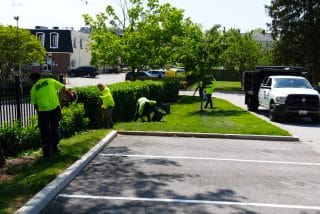
Establishing Property Appearance Standards for the Growing Season
Posted On
Commercial landscapes are highly visible assets that reflect the quality of property management and operational discipline. As the growing season begins, expectations for site presentation increase across all property types. Without clearly defined appearance standards, landscapes can become inconsistent, reactive, and misaligned with tenant and stakeholder expectations.
Establishing property appearance standards provides a structured framework for managing commercial landscaping expectations. These standards guide maintenance practices, define acceptable conditions, and support consistent site presentation throughout the growing season.
Property Appearance Standards and Commercial Landscaping Expectations
Property appearance standards translate broad expectations into measurable outcomes. Rather than relying on subjective assessments, standards define what acceptable landscape conditions look like across turf, beds, hardscape edges, and common areas.
For commercial properties, these expectations often include:
- Consistent turf height, density, and color
- Defined bed edges and clean mulch presentation
- Weed-free planting areas and maintained shrub structure
- Clear walkways, entrances, and pedestrian corridors
By formalizing these expectations, property managers create a baseline for performance that can be maintained consistently across the season.
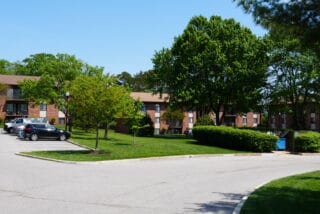
Site Presentation Management and Daily Perception
Site presentation is evaluated continuously by tenants, visitors, and stakeholders. Small inconsistencies—such as missed edging, debris accumulation, or uneven turf—can quickly influence perception.
Effective site presentation management focuses on maintaining a consistent standard rather than achieving periodic peak conditions. Weekly maintenance schedules support this approach by providing regular oversight and timely adjustments. Compared to extended industry-standard cycles, weekly service reduces variability and helps landscapes remain within defined standards at all times.
Defining Landscape Quality Benchmarks
Landscape quality benchmarks provide measurable criteria that support accountability and performance tracking.
Turf Standards
Turf benchmarks typically include mowing height consistency, uniform coverage, and absence of visible stress or thinning. Defined expectations help ensure that turf areas maintain both appearance and durability throughout the growing season.
Bed and Planting Standards
Landscape beds should maintain consistent mulch coverage, controlled weed presence, and properly maintained plant material. Pruning standards, spacing, and visibility all contribute to overall bed quality.
Hardscape Interface Standards
Transitions between turf, beds, and hardscape must remain clean and well-defined. Crisp edges improve both aesthetics and maintenance efficiency while supporting safe site conditions.
Aligning Standards With Facility Management Landscaping Goals
Appearance standards should align with broader facility management objectives. Properties with higher visibility or premium positioning may require more refined standards, while others may prioritize durability and cost efficiency.
Facility management landscaping strategies benefit from clearly defined expectations that match property goals. This alignment ensures that resources are applied appropriately and that landscape performance supports overall property operations.
Maintaining Consistency Across the Growing Season
Consistency is the primary benefit of established appearance standards. Without defined benchmarks, landscapes tend to fluctuate between high and low performance periods.
Weekly service schedules reinforce consistency by allowing landscape teams to maintain conditions within a narrow range. Frequent visits enable early correction of minor issues, preventing them from developing into noticeable deficiencies.
Accountability and Quality Assurance
Defined appearance standards improve accountability for both property managers and service providers. When expectations are clear, performance can be measured objectively.
Quality assurance processes—supported by in-house crews and daily oversight—ensure that standards are consistently applied. Regular inspections and documented observations provide a structured approach to maintaining performance throughout the season.
Adapting Standards to Seasonal Conditions
While standards provide consistency, they must also account for seasonal variability. Growth rates, weather conditions, and site usage patterns change throughout the year.
Flexible application of standards allows landscape teams to adjust practices while maintaining overall expectations. This balance supports both consistency and responsiveness as conditions evolve.

Supporting Long-Term Landscape Performance
Appearance standards do more than improve visual quality—they support long-term landscape health and operational efficiency. Consistent turf management, bed maintenance, and edge definition reduce stress on plant material and simplify maintenance processes.
Over time, properties with established standards experience fewer corrective issues, more predictable costs, and stronger overall performance.
Establishing a Framework for Reliable Site Presentation
Setting property appearance standards at the start of the growing season provides a clear framework for managing commercial landscapes. By defining expectations, aligning them with property goals, and reinforcing them through consistent maintenance, commercial properties achieve stable, high-quality site presentation.
When appearance standards guide daily operations, landscapes remain consistent, professional, and aligned with the expectations of tenants, visitors, and stakeholders throughout the growing season.